
Understanding OCD: Intrusive Thoughts and Compulsions
Obsessive-compulsive disorder (OCD) involves obsessions and compulsions. Obsessions can show up as unwanted thoughts, images, urges or doubts. Compulsions are repeated behaviours or mental acts used to reduce distress, feel certain, prevent something feared or make things feel “just right.”
Compulsions are not always visible. They can include mentally reviewing a memory, trying to find certainty, silently repeating a phrase or seeking reassurance. These actions may bring temporary relief while leaving the original doubt unresolved.
An intrusive thought is not the same as wanting it, agreeing with it or intending to act on it. OCD can attach distress and doubt to thoughts that feel especially important, disturbing or out of character.
Obsessions may involve
Compulsions may include
A HYPOTHETICAL EVERYDAY EXAMPLE
How an OCD Cycle Can Show Up
Imagine sending a message to a friend and later worrying that it sounded unkind. You reread it several times and ask someone else whether it was okay. The answer helps briefly, but another doubt returns. This illustrates one possible obsession-compulsion pattern, not a diagnosis or a real client story.
01
An ordinary moment
You send a message and go on with your day.
02
An intrusive doubt
A thought appears: “What if I sounded hurtful?”
03
Mental checking or reassurance
You reread the message repeatedly or ask for someone’s opinion.
04
Short-lived relief
You feel better for a moment, then wonder whether you missed something.
EXPOSURE AND RESPONSE PREVENTION
How ERP Works for OCD
Exposure and Response Prevention (ERP) is a form of Cognitive Behavioural Therapy (CBT) widely used in the treatment of OCD. The exposure part means intentionally practising contact with a trigger, thought, image, urge, sensation or uncertainty. Response prevention means practising not doing the compulsion or avoidance that would usually follow.
The International OCD Foundation describes ERP as a first-line psychological treatment for OCD. NICE guidance also recommends CBT that includes ERP. At Steyaert Counselling, ERP is a confirmed part of Hannah Steyaert’s approach.
01
Map the pattern
Notice the obsessions, compulsions, avoidance and reassurance that keep the cycle going.
02
Choose meaningful targets
Build a plan around situations that matter in your real life, rather than doing exposure for exposure’s sake.
03
Practise a different response
Approach uncertainty gradually while reducing the ritual, reassurance or avoidance that normally follows.
04
Review and adjust
Notice what you learn, refine the plan and make the next step realistic enough to practise.
Gradual and collaborative
ERP can feel uncomfortable because it involves practising a different response to distress and uncertainty. That does not mean beginning with your hardest fear. The International OCD Foundation describes planned, collaborative exposure work in which people are not forced or deceived. You can ask how pacing and readiness would be discussed before deciding whether to begin.
THERAPIST FIT
Meet Our Therapists
If you are seeking OCD-specific ERP, Hannah offers this approach in London and online. Both clinicians offer counselling and can be contacted to discuss whether their services fit your concerns.

Hannah Steyaert, M.A., RP
In person in London or online across Ontario
ERP AND CBT WITH HANNAH
Hannah primarily works from a psychodynamic perspective and also offers ERP, CBT, ACT, DBT and attachment-based therapy. If you want to explore ERP for OCD, you can ask how she determines whether that approach is appropriate for your concerns.
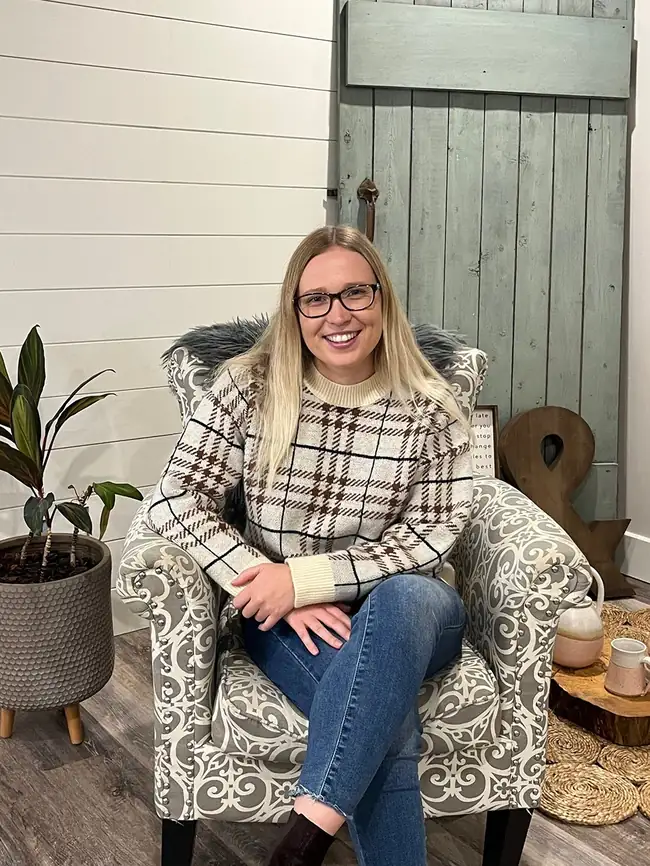
Hailey Steyaert, M.A., RP
In person in Burlington or online across Ontario
COUNSELLING WITH HAILEY
Hailey offers individual counselling in Burlington and online across Ontario. Her confirmed work includes ACT, trauma-focused therapy, trauma-informed care and DBT-informed tools. A consultation can help you discuss whether her services match what you are looking for.
What Getting Started with OCD Therapy Can Look Like
You do not need a diagnosis, a complete explanation or a treatment plan before you reach out. A first conversation can help identify the questions worth exploring.
Ask about fit
The free 10-minute consultation is a chance to briefly share what brings you here, ask about ERP and discuss whether a full appointment makes sense. It is not a therapy session.
Explore what is happening
In a paid individual session, you can talk about intrusive thoughts, rituals, avoidance, the impact on daily life and goals that matter to you. You do not have to explain everything at once.
Discuss a suitable plan
Treatment may include CBT and ERP with Hannah when appropriate. Together, you can discuss pace, between-session practice where useful and how to review progress without promising a fixed timeline.
To explore how individual sessions are structured, read more about individual therapy.
Questions You May Have Before Reaching Out
For some people, the hardest part of beginning OCD therapy is not knowing how to talk about it or whether a different approach would help. Both are reasonable things to discuss.
What if my intrusive thoughts feel too difficult to share?
You can begin by saying that your thoughts are upsetting or difficult to describe. A free consultation can focus on your concerns, questions and therapist fit. You do not need to provide every detail of an intrusive thought in that brief conversation.
What if earlier therapy did not address my compulsions?
Some previous counselling may have helped you understand worry without directly addressing checking, reassurance, mental reviewing or avoidance. You can ask whether the proposed treatment includes OCD-focused CBT and ERP, and what that would involve.
London, Burlington and Online Options
Meet in person at either office, or choose online therapy or phone appointments across Ontario. Hannah offers ERP in London and online. Our free consultation can help you discuss the available options.
London
IN-PERSON WITH HANNAH
659 Central Ave, Suite 15, London, ON N5W 3P7. Hannah meets clients here for in-person counselling, including ERP when appropriate. Free parking is available. Phone: 226-970-2861.
Burlington
IN-PERSON WITH HAILEY
582 Guelph Line, Burlington, ON L7R 3M4. Hailey provides in-person counselling at this office. Free parking is available. Phone: 647-970-1790.
Online across Ontario
VIDEO OR PHONE APPOINTMENTS
Both clinicians provide online therapy across Ontario and phone appointments. Hannah can also provide ERP online when it is an appropriate fit for your needs.
Fees and Practical Details
Free consultation: 10 minutes with either clinician. Individual therapy: $165 CAD for a 50-minute session. The consultation is not a paid therapy session.
Receipts for eligible insurance reimbursement are available, but coverage depends on your plan. The practice requires 48 hours’ notice to cancel or reschedule without the regular full-session charge. You can review the fees and insurance information before booking.
COMMON QUESTIONS
Common Questions About OCD Therapy
You can ask about treatment and practical arrangements before committing to ongoing therapy. Here are a few questions that may help you plan your next step.
A SIMPLE NEXT STEP
Book a Free 10-Minute Consultation
A free 10-minute consultation offers a brief opportunity to ask about therapy, discuss fit and decide whether you would like to book a full appointment. It does not reserve an ongoing therapy session. If you have a question or are unsure whom to contact, use the inquiry form below. Sending the form does not book an appointment.
Clinical Information and Further Reading
For additional clinical information about OCD and its treatment, these organizations provide more detailed resources:
To learn more about one-to-one sessions, see our individual therapy page.